
Foam Roller vs. Massage Gun: Which Is Better for Your Recovery?
The Modern Muscle Recovery Debate
Massage Gun vs Foam Roller: Navigating the world of self-myofascial release (SMR) can be overwhelming with the sheer variety of tools available today. Whether you are a professional athlete or a weekend warrior, the primary goal remains the same: managing the “Saran wrap” of the body known as fascia. This connective tissue surrounds every muscle fiber and group, but when it becomes rigid, it can impede circulation and cause stiffness. The debate between the traditional foam roller and the high-tech massage gun isn’t necessarily about which is “better,” but rather which tool is appropriate for your specific physiological needs. While one offers a broad, manual approach, the other provides rapid, tech-infused precision. Understanding these nuances is the first step toward a more mobile, pain-free lifestyle.
- Top 10 Best Massage Guns for 2026
- Top 10 Foam Rollers for Muscle Recovery
- Are Massage Guns Worth It?
The Classic Tool: Understanding Foam Rolling
The foam roller has been the “OG” of recovery for decades, originating in physical therapy before moving into mainstream fitness. These dense, cylindrical tubes allow users to utilize their own body weight to apply pressure across large muscle groups. This process helps break up stagnation in the fascia, reduces adhesions, and draws fresh blood to the area to improve tissue hydration.
One of the greatest benefits of foam rolling is its ability to cover broad surface areas efficiently. It is particularly effective for the quads, hamstrings, and back, acting as a functional substitute for passive stretching. By rolling slowly over a muscle, you can identify areas of tension and use gravity to “iron out” the tissue. Additionally, foam rollers are highly budget-friendly, with most quality models costing between $20 and $50, making them accessible for any fitness level.
The High-Tech Contender: Percussive Therapy
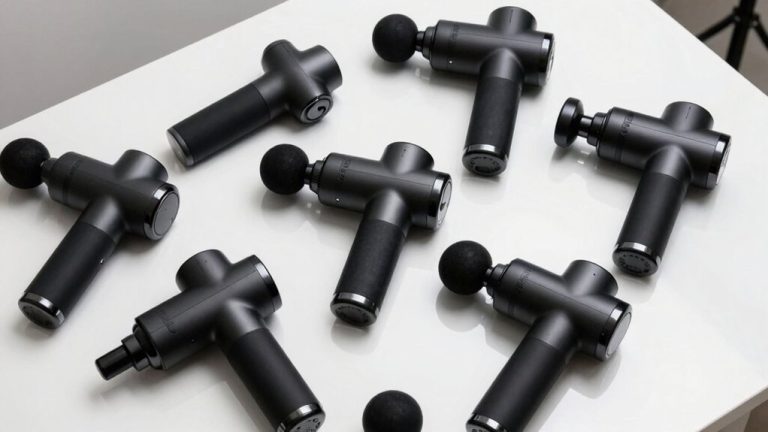
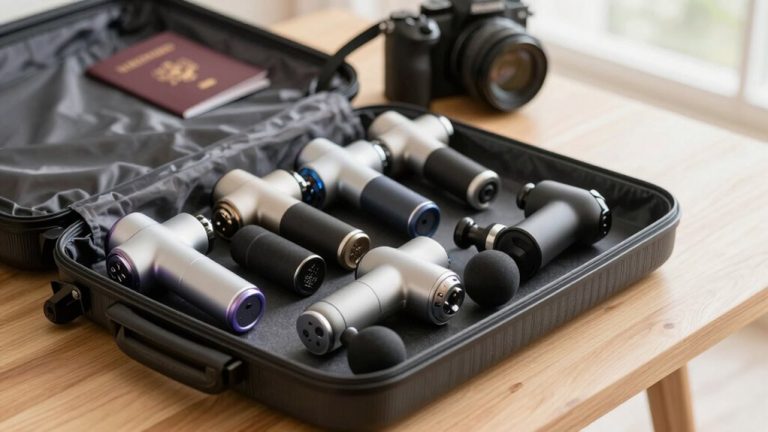
Massage guns (also known as percussive therapy devices) represent the modern evolution of SMR. Unlike the static pressure of a roller, these devices use rapid, repetitive strokes to penetrate deep into the muscle tissue. This percussive therapy mimics the effects of a deep-tissue massage by sending concentrated pulses of pressure into the muscle.
The standout feature of a massage gun is its targeted precision. It is the superior tool for addressing trigger points or “knots”—those hyper-localized, painful spots in the glutes, traps, or feet that a broad roller might miss. Furthermore, because they are handheld and battery-powered, they require significantly less physical effort than rolling on the floor. However, this convenience comes at a higher price point, with premium models often ranging from $100 to over $300.
While not explicitly detailed, technical specs like amplitude (how deep the head travels) and stall force (how much pressure you can apply before the motor stops) are the primary factors that justify the higher cost of professional-grade massage guns.)
The Performance Verdict: Science-Backed Findings
Recent research has challenged the common practice of using these tools during a warm-up. A 2025 study involving trained athletes found that using either a massage gun or a foam roller for 12 minutes immediately following a dynamic warm-up actually impaired explosive performance. Specifically, participants saw significant reductions in countermovement jump (CMJ) height and sprint speed compared to doing a dynamic warm-up alone.
However, the news isn’t all negative for pre-workout use. The same study noted that foam rolling provided modest improvements in ankle mobility and a significant reduction in perceived muscle soreness. This suggests that if your primary goal for a session is flexibility or range of motion—rather than maximum power—these tools are still highly beneficial. For recovery, both tools are scientifically recognized for their ability to mitigate Delayed Onset Muscle Soreness (DOMS) by flushing metabolic waste and improving blood flow post-exercise.
Head-to-Head: Choosing the Right Tool
| Feature | Foam Roller | Massage Gun |
|---|---|---|
| Primary Mechanism | Static pressure & body weight | Percussive pulses & vibration |
| Target Area | Broad (Quads, Back, Hips) | Focused (Knots, Traps, Feet) |
| Intensity | Dependent on body weight | Adjustable speed settings |
| Effort Required | High (Requires floor work) | Low (Handheld convenience) |
| Average Cost | $20 – $50 | $100 – $300+ |
When to choose a Foam Roller: Select the roller if you are on a budget, want to improve general flexibility, or need to treat larger muscle groups like the hamstrings after a long run. When to choose a Massage Gun: Opt for the gun if you have specific “problem spots,” value time-saving convenience, or require deep tissue penetration that a surface-level roller cannot provide.
Safety, Best Practices, and Missing Perspectives
Safety is paramount when using high-intensity recovery tools. You should never use a foam roller or massage gun on bony protrusions, open wounds, or undiagnosed injuries like severe sprains.
(Information gain: It is critical to note that individuals with circulatory issues (e.g., DVT), nerve sensitivity, or those who are pregnant should consult a medical professional before use, as the rapid vibration and deep pressure can affect blood flow and nerve endings in ways not covered in general fitness guides. Additionally, for chronic conditions like plantar fasciitis or sciatica, these tools should be used as part of a clinical plan rather than a total replacement for professional physical therapy.)
Finally, remember that consistency is the “secret sauce.” Experts suggest that it takes approximately two years for fascial tissue and collagen to fully turnover, meaning your recovery routine should be a long-term lifestyle choice, not a one-time fix.
Final Thought: A Multi-Modality Approach
Ultimately, the most effective recovery routine often involves both tools. You can use a foam roller for general “muscle-belly loosening” and a massage gun for the pinpoint precision required to break up stubborn knots. Think of muscle maintenance like brushing your teeth; if you skip it for several days, metabolic waste and tension “build up,” leading to discomfort and decreased performance. By integrating both tools—perhaps using the roller for post-workout cool-downs and the massage gun for targeted relief during the workday—you can ensure your body remains resilient and ready for the next challenge.
Frequently Asked Questions
Is a massage gun better than a foam roller for recovery?
Neither is definitively better; they serve different roles. A massage gun is superior for deep, localized knots, while a foam roller is better for broad muscle groups and flexibility.
Should I use a massage gun before or after a workout?
While often used pre-workout, scientific studies suggest it may temporarily reduce explosive power. It is generally most effective post-workout for reducing DOMS and flushing metabolic waste.
Can a foam roller help with muscle “knots”?
Yes, but it is less precise. For deep-seated trigger points, a massage gun or a lacrosse ball is often more effective due to the smaller surface area.
Are massage guns worth the high price compared to rollers?
For athletes who train multiple times a week and need fast, deep recovery, the investment is often worth it. For general stretching and mobility, a foam roller is an excellent, cost-effective alternative.
Can I use both tools in my routine?
Yes. Experts recommend using a foam roller for broad tissue work and a massage gun for targeted, deep-tissue relief.
Are there areas where I should never use a massage gun?
Avoid bony areas, the neck (unless specifically designed for it), open wounds, or areas with acute inflammation or undiagnosed injuries.
Learn More:
Explore Fitness & Wellness Rankings
Best Massage Guns for Muscle Recovery
Massage Gun vs Foam Roller