

Are Massage Guns Worth it? A Science-Backed Guide to Percussive Therapy
The rise of massage guns, technically known as percussive therapy devices, has transformed from a niche tool for professional athletes into an omnipresent wellness trend. Shaped like power tools and often sounding like “out-of-control washing machines,” these handheld devices use vibration and deep oscillation to treat irritated muscles. While they are marketed as a “wellness tool” for everyone from marathon runners to office workers dealing with “tech neck,” scientific evidence regarding their efficacy remains a mix of proven short-term benefits and aggressive marketing claims.
How It Works: The Science of Percussion vs. Vibration
Massage guns deliver high-speed percussion combined with vibration to manipulate soft tissues. This process differs from standard vibration therapy; while vibration stimulates the skin’s surface to cause involuntary muscle contraction, percussive therapy reaches up to 60% deeper into the tissue. This mechanical stimulus is thought to work through three primary categories:
- Neuronal Mechanisms: The rapid pulses may override pain signals sent to the brain via the gate-control theory, which suggests that stimulating non-painful nerve fibers (Aα and Aβ) can inhibit nociceptive (pain) input.
- Vascular Responses: Research indicates that the “mini hammer” action increases blood flow and skin temperature, which helps flush out metabolites like lactic acid and calcium that accumulate after intense exercise. One study found that blood flow could increase by over 500% compared to baseline after just two minutes of treatment.
- Mechanical Changes: The pressure helps reduce muscle stiffness and alters the viscoelasticity of connective tissues, potentially breaking up small bundles of stuck muscle fibers known as knots or adhesions.
The Benefits: What Research Supports (and What It Doesn’t)
According to a systematic review, the data on massage guns is still evolving, but clear patterns have emerged.
Proven Short-Term Gains
Massage guns are highly effective for temporary improvements in range of motion (ROM), flexibility, and reduced muscle stiffness. Studies show they can provide the same benefit as a 15-minute manual massage in as little as two minutes. They are also beneficial for reducing the intensity and duration of delayed onset muscle soreness (DOMS) when used within 48 hours of a workout.
The Limits of Performance
While they excel at recovery, research is clear that these devices do not improve high-level physical functions such as strength, speed, agility, or explosive power. In some cases, using a massage gun immediately before explosive activities like jumping may even cause a slight decrease in performance due to the temporary reduction in muscle stiffness.
Scientific “Red Flags”
Some manufacturers claim massage guns can improve immunity, sleep, and mental health. Experts label these as major red flags, noting there is no scientific evidence to support such far-reaching claims.
Practical Guide: How to Use a Massage Gun Safely
To avoid injury, users should treat these devices with the same caution as any other power tool.
- Target Large Muscle Groups: Use the device on bulky areas like the quadriceps, hamstrings, glutes, calves, and upper traps.
- Avoid Bony Sites: Never use the gun on joints, the spine, the head, or the front of the shins.
- Mind the “Danger Zones”: Avoid the front of the neck and the torso, where vital organs and major blood vessels are located.
- Duration Matters: Limit application to roughly two minutes per muscle group. Overstimulating tissue can lead to bruising or a serious condition called rhabdomyolysis (muscle tissue breakdown).
- Let the Gun do the Work: Do not press down hard; simply float the head over the muscle and let the device provide the pressure.
Buying Guide: Choosing the Right Device
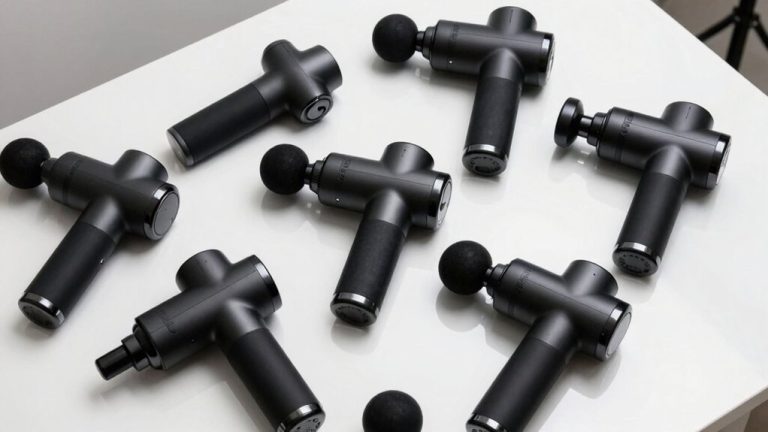
With prices ranging from $30 to $600, choosing a device depends on desired features rather than therapeutic outcomes, as there is no evidence that expensive models provide better physical results. Check out 9 Best Massage Guns for 2026 for an in depth analysis.
- Amplitude (Stroke Depth): This is how deep the head plunges; high-end models typically have a higher amplitude for deeper tissue penetration.
- Technical Specs: Consider stall force (how much pressure is required to stop the motor), battery life, and noise levels. Models with a brushless motor are often quieter and more relaxing.
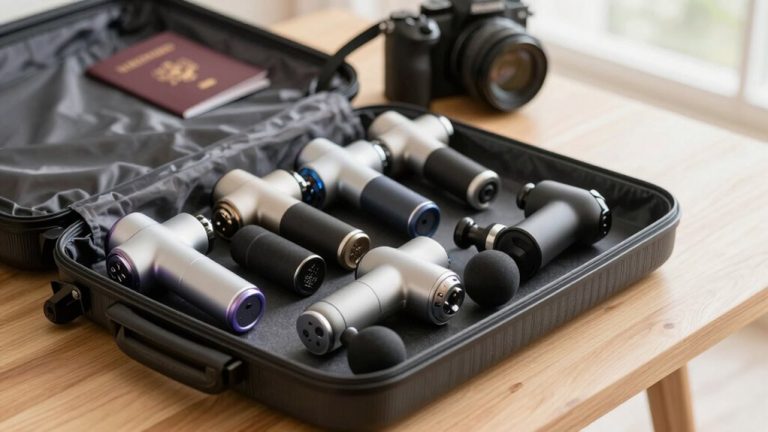
- Attachment Heads: Use the blunted or flat head for large muscle groups, the ball attachment for smaller sites, and the bullet head for isolated trigger points.
Safety and Contraindications
Percussive therapy is not for everyone. You should avoid using a massage gun if you have:
- Deep Vein Thrombosis (DVT) or blood clotting disorders.
- Pregnancy (consult a doctor first).
- Advanced Osteoporosis or low bone density.
- Pacemakers or implanted hardware.
- Acute inflammation, open wounds, or recent fractures.
Under-Covered and Missing Subtopics
While the sources are comprehensive regarding immediate use, they are notably silent on several key areas:
- Long-Term Effects: There is virtually no research on the chronic usage of these devices over months or years.
- Device Hygiene: The sources do not provide guidance on how to clean and sanitize attachment heads that come into frequent contact with sweat and skin.
- The Placebo Effect: While one source mentions it as a “neural mechanism” that distracts the brain, the psychological impact of using a high-cost device—and whether that creates a perceived recovery—is not deeply explored.
- Comparison to Advanced Tech: There are few comparisons between massage guns and other recovery tech like compression boots or EMS units.
Verdict on Value
Massage guns are a useful supplement to recovery, but they are not a “magic bullet.” They should not replace the “low-hanging fruit” of recovery: sleep, nutrition, hydration, and load management. As one expert notes, a simple walk outdoors or a dedicated stretching routine may provide more scientifically-backed benefits than an expensive gadget.
Frequently Asked Questions (FAQs)
Can a massage gun replace foam rolling?
Massage guns can be more effective for isolating specific knots and are often preferred by users because they are less painful than traditional foam rolling.
Is it safe to use a massage gun on my neck?
You should avoid the front of the neck and the spine. To relieve neck tension, target the upper trapezius muscle (the area between your shoulder and neck).
Does percussive therapy help with weight loss?
There is no scientific evidence that massage guns assist with weight loss or the reduction of cellulite.
Why does my skin itch or turn red after use?
Redness is typically caused by increased blood flow and skin temperature. However, if you experience pain or bruising, you may be applying too much pressure or using the device for too long.
How often should I use it?
It should not be used as a “prophylactic” or preventive tool every day. It is best used when you feel specific discomfort or stiffness following an intense workout.
Can I use a massage gun if I have an injury?
You should consult a medical professional before using a massage gun on a clinical injury, as percussive force can worsen fractures or inflammation.
Learn More:
Explore Fitness & Wellness Rankings
Top 10 Percussion Massage Guns for Athletes

[…] Are Massage Guns Worth It? […]
[…] All Fitness & Wellness RankingsTop 10 Best Percussion Massage GunsTop 10 Mini Massage GunsAre Massage Guns Worth It?Best Heating Pads for Back […]