
A Physical Therapist’s Guide to Recovery and Performance
The Rise of At-Home Percussive Therapy
How Often Should You Use a Massage Gun? | Once a luxury reserved for professional sports clinics, percussive therapy has transitioned into a dominant DIY alternative for home recovery. Devices like the Hypervolt and Theragun have popularized the use of rapid, repetitive pressure combined with vibration therapy to treat soft tissue. By delivering high-frequency bursts of pressure into the myofascial tissues, these tools aim to “unstick” thickened fascia and provide rapid relief for muscle knots. While they resemble high-tech power tools, understanding the nuances of their application is the difference between an effective recovery protocol and a “useless hammer”.
The Science of Benefits: What Research Says
Percussive therapy is highly effective for managing Delayed Onset Muscle Soreness (DOMS), which occurs due to tiny muscle fiber tears after intense activity. Using a massage gun can increase skin temperature and blood circulation, helping to flush out metabolites like lactic acid and calcium that cause post-exercise pain.
Furthermore, research consistently validates improvements in range of motion (ROM) and flexibility. By thinning thickened fascia fluids, these devices make the tissue more pliable, allowing for easier movement. However, there is a Performance Paradox: while massage guns improve mobility, using them immediately before explosive activities (like sprinting or jumping) may actually decrease performance because the reduction in muscle stiffness can limit “spring-like” power.
Physiological vs. Perceived Relief A critical subtopic often under-covered is whether these benefits are purely physical. While users report significant pain reduction, some studies show no difference in heart rate or lactate concentration between percussive therapy and passive rest. This suggests the Gate Control Theory is at play: the rapid vibration interferes with pain signals sent to the brain, providing a powerful analgesic sensation that may outpace actual biological tissue changes.
“Mindful Gunning”: How to Use Your Device Correctly
To see long-term improvement rather than just short-term relief, experts recommend “Mindful Massage Gunning”.
- Muscle Activation (Pre-Workout): Target muscles for 10 to 30 seconds to increase blood flow and responsiveness.
- Muscle Recovery (Post-Workout): Spend up to two minutes per muscle group to encourage relaxation and blood circulation.
- Total Duration: Full-body sessions should not exceed 15 minutes to prevent overstimulation.
Anatomical Directionality For true myofascial release, you must be specific with direction. To release a tight muscle, move the gun from the origin to the insertion point (distal). Conversely, to activate or stimulate a muscle before activity, move from the insertion back toward the origin.
Buyer’s Guide: Features and Attachments That Matter
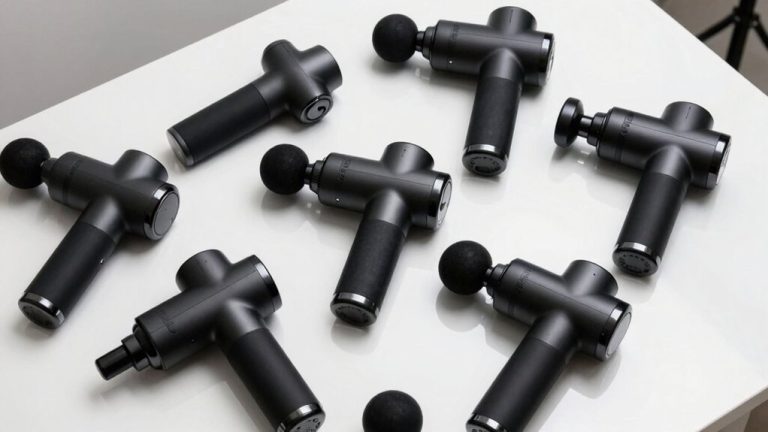
When selecting a device, look for a brushless motor for quiet operation and a high stall force to ensure the motor doesn’t stop when pressure is applied. Amplitude (stroke depth) is the most important spec; cheaper models may only vibrate the skin, while professional-grade guns reach up to 16mm into the tissue.
Attachment Guide:
- Round/Ball: The most versatile for large muscle groups like quads or glutes.
- Bullet: Best for localized trigger points and deep tissue work.
- Fork: Designed to straddle the spine or target the Achilles tendon.
- Flat: A general-use head suitable for all muscle types.
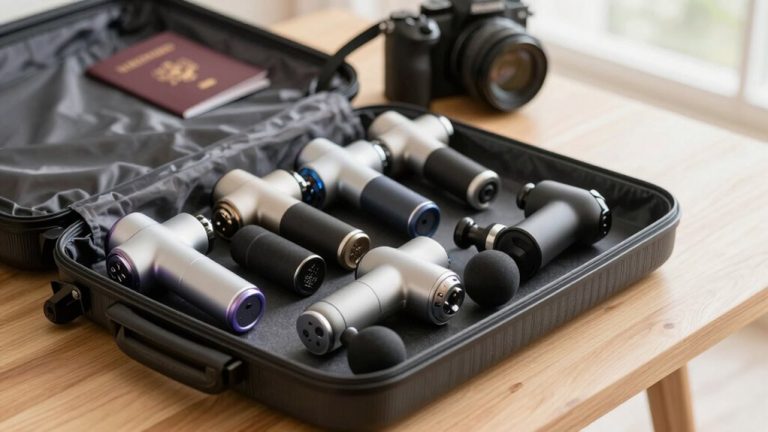
Maintenance and Travel While sources focus on usage, users should note that porous foam heads require regular sanitization to prevent bacteria buildup. Additionally, because most guns use high-capacity lithium-ion batteries, they must be carried in carry-on luggage rather than checked bags per TSA safety regulations.
Safety First: When to Put the Gun Down
Safe use requires avoiding “No-Go” zones. Never use the device on the face, head, or the front and sides of the neck, as the percussive force can damage the carotid artery, nerves, or even cause ocular injuries. You must also avoid bony prominences and joints to prevent irritating tendons or bursa sacs.
Medical Red Flags: Consult a physical therapist or doctor if you have high blood pressure, osteoporosis, deep vein thrombosis (DVT), or are pregnant. Improper use on compromised tissue can lead to bruising, nerve damage, or rhabdomyolysis (a dangerous muscle tissue breakdown that affects the kidneys).
Demographic Data Gaps Current clinical research is largely based on homogeneous populations (typically active males in their 20s). The long-term effects of daily percussive therapy on muscle density and nerve sensitivity are currently unknown.
Conclusion: Integrating Massage into a Healthy Lifestyle
Massage guns are an excellent supplement to a wellness routine, but they should not replace active movement. Movement remains the best “medicine” for recovery. As experts suggest, these tools are best used to improve mobility so you can stay active, rather than as a substitute for exercise itself.
Frequently Asked Questions
Can I use a massage gun every day?
Yes, it is generally safe for daily use to manage muscle tension, provided you limit each muscle group to 2 minutes and avoid sensitive areas.
Why does my skin itch after using it?
Vibration increases skin temperature and blood flow, which can cause a temporary itching sensation or redness.
Is it better than a foam roller?
Massage guns can reach deeper tissue and provide more precise pressure than foam rollers, though both are effective for improving ROM.
Can I use it on my neck?
Never on the front or sides. You may safely use it on the supporting muscles at the back of the neck, like the traps, but avoid the spine and major arteries.
Should I press down hard?
No. Let the gun do the work. The intensity should be “comfortably uncomfortable” (4-6 on a scale of 10).
Can it help with a torn muscle?
No. Do not use a massage gun on acute injuries, sprains, or torn muscles, as it can exacerbate the damage.
Learn More:
The Effects of Massage Guns on Performance and Recovery: A Systematic Review
Considering a massage gun? Here’s what you need to know about percussive therapy
Browse Fitness & Wellness Roundups